

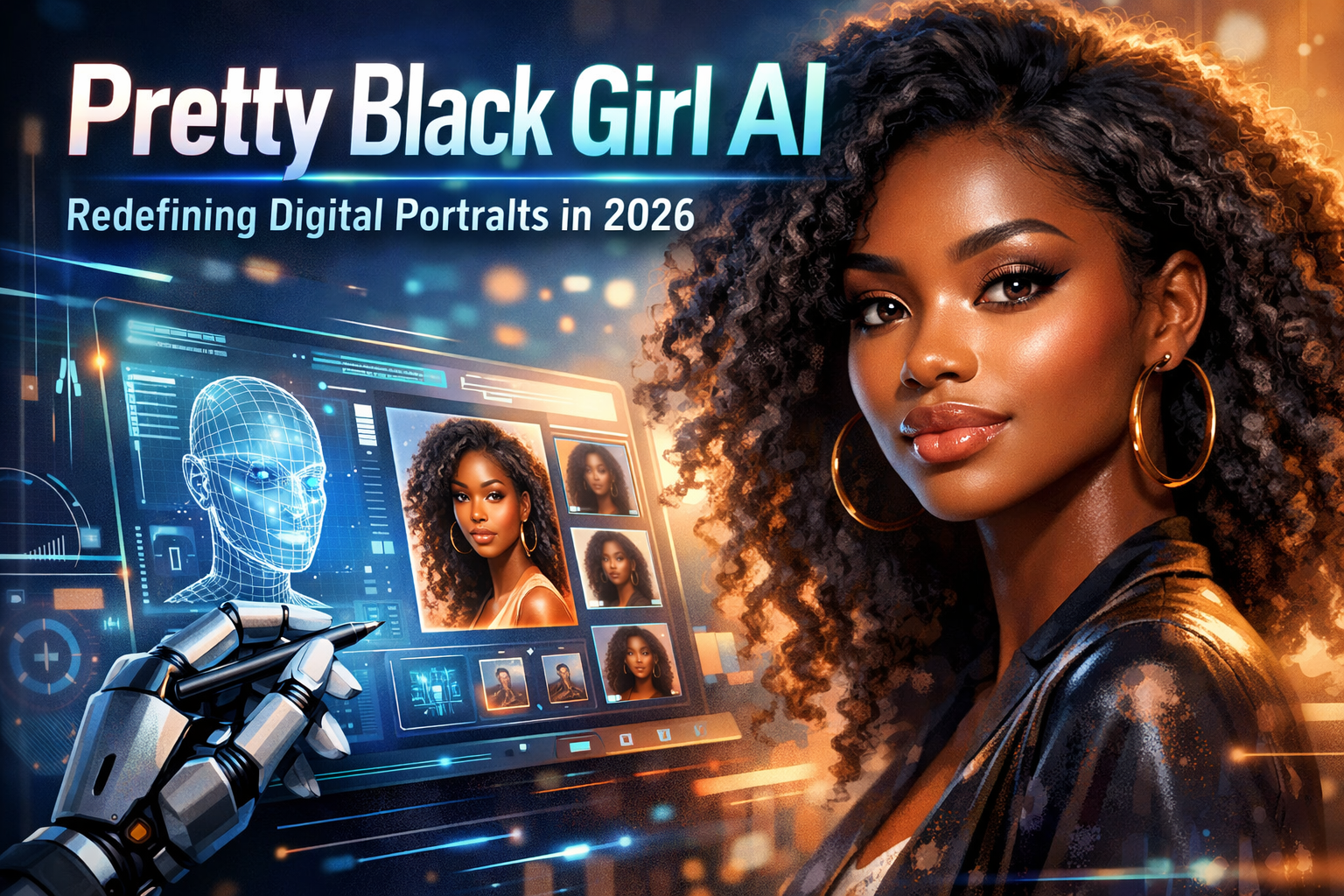
Can AI truly capture the beauty, nuance, and personality of a person in a single digital portrait? In 2026, the answer is a resounding yes — thanks to advances in generative AI, deep learning, and creative algorithms that can now generate lifelike portraits in seconds. Among these trends, “Pretty Black Girl AI” has emerged not just as a viral curiosity, but as a powerful case study in the convergence of technology, art, and representation.
From designers experimenting with hyper-realistic digital characters to social media enthusiasts generating their own portraits, AI tools are reshaping how we think about creativity, identity, and the future of imagery. But behind the stunning visuals lies a mix of opportunity, ethical debate, and technological innovation — and that’s exactly what we’re exploring today.
Quick Tech Summary
| Main Topic | Pretty Black Girl AI Portraits |
|---|---|
| Tech Type | AI-powered generative art / software |
| Launched / Popular Since | 2024–2026 |
| Ideal For | Digital artists, creators, social media enthusiasts, marketers |
| Key Insight / Impact | AI tools now allow highly realistic, culturally diverse portraits while raising questions of ethics, bias, and digital representation |
What Is Pretty Black Girl AI and Why It’s Trending in 2026
Generative AI has gone beyond creating generic images. Tools like DALL·E, MidJourney, and Stable Diffusion have empowered users to specify attributes — from hairstyle and skin tone to clothing style and background aesthetic — producing portraits that are stunningly lifelike.
The Pretty Black Girl AI trend represents a shift: technology that highlights diversity and representation in a medium historically dominated by Eurocentric norms. Suddenly, digital artists, content creators, and hobbyists can generate portraits that authentically reflect Black women in a variety of styles — from hyper-realistic to artistic abstractions.
Wired recently highlighted this trend, noting that “AI-generated diverse portraits are opening doors for inclusivity in digital art.”
Why it matters: Beyond aesthetics, these AI tools allow rapid prototyping for designers, provide visual content for social media, and even help marketers craft culturally authentic campaigns.
Top AI Tools for Creating Stunning Black Girl Portraits
Whether you’re a creator or simply curious, the tools behind these portraits are accessible and increasingly sophisticated:
- DALL·E 3 (OpenAI) – Exceptional for customizable, realistic portraits. Users can tweak lighting, background, and expression for hyper-personalized results.
- MidJourney v6 – Known for stylistic flexibility, producing both artistic and lifelike images. Great for designers seeking creative inspiration.
- Stable Diffusion XL – Offers local rendering options, giving users full control over prompts, making it ideal for experimentation without subscription constraints.
Pro Tip: Experiment with prompt engineering — the exact wording of your description significantly influences skin tone, facial features, and overall realism.
Step-by-Step: How to Generate Your Own Pretty Black Girl AI Portrait
Creating your first AI portrait is surprisingly intuitive:
- Choose Your Tool: Pick one based on style preference (realistic vs artistic).
- Define Key Attributes: Specify age, skin tone, hairstyle, and attire.
- Refine With Iterations: Run multiple generations and select the best output.
- Enhance in Post-Processing: Minor touch-ups in Photoshop or Canva can add polish.
- Export & Use Responsibly: Respect copyright and ethical guidelines when sharing.
TechCrunch notes that “AI portrait generation tools are now so advanced, beginners can achieve results comparable to professional artists in minutes.”
Real-World Applications of Pretty Black Girl AI
AI-generated portraits are not just digital novelties. Here’s how creators and brands are using them:
- Social Media Profiles: Influencers generate unique avatars or aesthetic imagery for posts.
- Digital Marketing Campaigns: Brands use diverse AI portraits to resonate with audiences authentically.
- Creative Projects: Artists experiment with styles that would be time-consuming or costly manually.
- Education & Workshops: AI portraits teach students about AI, representation, and creative expression.
The combination of speed, affordability, and creative control is what makes AI-generated portraits a mainstream tool in 2026.
Ethics, Representation, and Bias in AI Portraits
Despite their potential, AI-generated images are not without controversy:
- Bias in Training Data: AI models can inadvertently favor certain facial features or skin tones.
- Cultural Sensitivity: Misrepresenting features or attributes can perpetuate stereotypes.
- Ownership & Consent: Who owns an AI-generated portrait, and what are the legal implications?
Experts suggest auditing AI datasets, using inclusive prompts, and maintaining transparency when using AI portraits commercially.
MIT Technology Review emphasizes that “AI tools must be intentionally inclusive, or they risk reinforcing societal biases.”
Pros, Cons, and Expert Takeaways
Pros:
- Rapid generation of high-quality images
- Supports creative experimentation
- Promotes diverse digital representation
Cons:
- Ethical challenges in representation
- Risk of overreliance on AI replacing human creativity
- Requires thoughtful prompt engineering for accuracy
Expert Insight: Creative technologists agree that AI portraits are a complementary tool, not a replacement for human artistry. The real magic lies in the collaboration between AI and human creativity.
Top Alternatives and Advanced Techniques
- Runway ML – Excellent for video and motion portraits
- Artbreeder – Blends traits to create unique digital characters
- Custom GANs – For technically savvy creators, training your own models offers ultimate control
Pro tip: Combining AI-generated portraits with traditional digital painting techniques produces truly unique artwork.
What’s Next for AI-Generated Portraits in 2026
The future is vibrant:
- Real-time AI avatars in gaming, VR, and AR
- AI-assisted storytelling for comics, animations, and interactive media
- Greater inclusivity in datasets, reducing bias and enhancing diversity
Forbes Tech predicts that “AI-driven portrait tools will become a standard part of creative workflows, much like Photoshop today.”
FAQs About Pretty Black Girl AI
- Can AI fully replace human artists?
No. AI is a tool to augment creativity, not replicate the nuanced touch of human artistry. - Are AI portraits copyright-protected?
Ownership depends on platform policies; always check terms before commercial use. - How do I ensure AI portraits are respectful and realistic?
Use inclusive prompts, audit generated images, and avoid stereotypical portrayals.
Internal & External References
Internal Links:
- “Explore our guide to the best AI content tools in 2026”
- “Check out how automation is reshaping creative industries”
External Sources:
- Wired: “The Rise of AI-Generated Portraits”
- TechCrunch: “Diversity in AI Art”
- MIT Technology Review: “Bias in Generative AI Tools”
Conclusion: The Future of AI Portraits
AI-generated art is no longer a fringe curiosity. Tools like Pretty Black Girl AI are empowering creators, highlighting representation, and pushing digital art into uncharted territories.
The question isn’t just what AI can create — it’s how we choose to use it. Will we lean on AI to amplify creativity, or will we let it define the aesthetics for us?
Curiosity-Driven Ending:
Which upcoming AI creative tool excites you the most — or makes you wonder whether the next viral portrait could be entirely AI-generated?